Directed Reading Major Biological Communities Answer Key
Introduction
Organisms live within an ecological community, which is defined as an assemblage of populations of at least two different species that interact directly and indirectly inside a defined geographic area (Agrawal et al. 2007; Ricklefs 2008; Brooker et al. 2009). Species interactions form the basis for many ecosystem properties and processes such equally nutrient cycling and food webs. The nature of these interactions tin vary depending on the evolutionary context and environmental conditions in which they occur. As a outcome, ecological interactions between individual organisms and unabridged species are oft difficult to define and mensurate and are ofttimes dependent on the calibration and context of the interactions (Harrison & Cornell 2008; Ricklefs 2008; Brooker et al. 2009). Notwithstanding, there are several classes of interactions among organisms that are found throughout many habitats and ecosystems. Using these classes of interactions as a framework when studying an ecological customs allows scientists to describe naturally occurring processes and aids in predicting how human alterations to the natural world may touch on ecosystem properties and processes.
At the coarsest level, ecological interactions can be defined every bit either intra-specific or inter-specific. Intra-specific interactions are those that occur between individuals of the same species, while interactions that occur between two or more than species are called inter-specific interactions. However, since almost species occur inside ecological communities, these interactions tin be affected past, and indirectly influence, other species and their interactions. The ones that volition be discussed in this article are competition, predation, herbivory and symbiosis. These are not the only types of species interactions, merely the nearly studied — and they are all parts of a larger network of interactions that make upward the circuitous relationships occurring in nature.
Competition
Contest is most typically considered the interaction of individuals that vie for a mutual resources that is in limited supply, but more generally can be defined as the direct or indirect interaction of organisms that leads to a change in fettle when the organisms share the same resources. The outcome normally has negative effects on the weaker competitors. There are three major forms of competition. Two of them, interference competition and exploitation competition, are categorized as real competition. A third form, credible contest, is not. Interference competition occurs directly between individuals, while exploitation competition and apparent competition occur indirectly between individuals (Holomuzki et. al 2010) (Figure 1).
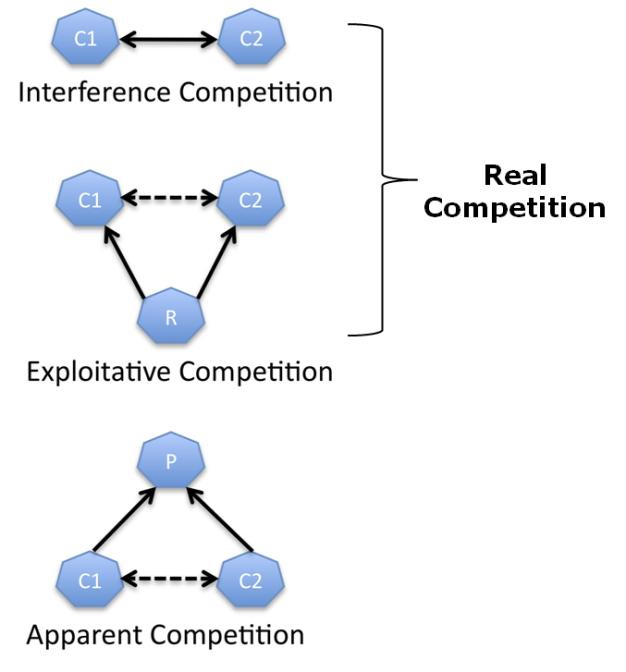
Figure 1: The three major types of competitive interactions.
Diagrams illustrating the 3 major types of competitive interactions where the dashed lines betoken indirect interactions and the solid lines direct interactions that are function of ecological communities. C1 = Competitor #1, C2 = Competitor #2, P = Predator, R = Resource.
When an individual directly alters the resource-attaining behavior of other individuals, the interaction is considered interference competition. For example, when a male gorilla prohibits other males from accessing a mate by using physical assailment or displays of assailment, the dominant male is direct altering the mating beliefs of other males. This is also an example of an intra-specific interaction. Exploitation competition occurs when individuals interact indirectly equally they compete for common resources, like territory, casualty or food. Simply put, the use of the resource by one individual will decrease the amount available for other individuals. Whether by interference or exploitation, over time a superior competitor tin can eliminate an junior one from the area, resulting in competitive exclusion (Hardin 1960). The outcomes of competition betwixt two species can be predicted using equations, and one of the about well known is the Lotka-Volterra model (Volterra 1926, Lotka 1932). This model relates the population density and carrying capacity of two species to each other and includes their overall issue on each other. The 4 outcomes of this model are: one) species A competitively excludes species B; two) species B competitively excludes species A; 3) either species wins based on population densities; or 4) coexistence occurs. Species tin survive together if intra-specific is stronger than inter-specific competition. This ways that each species will inhibit their own population growth earlier they inhibit that of the competitor, leading to coexistence.
Another machinery for avoiding competitive exclusion is to adopt alternative life history and dispersal strategies, which are usually reinforced through natural selection. This mechanism reduces competitive interactions and increases opportunities for new colonization and food acquisition. The success of this is often dependent upon events (such every bit tide, flood, or fire disturbances) that create opportunities for dispersal and nutrient conquering. Consider that Plant Species A is more efficient than Found Species B at nutrient uptake, just Plant B is a ameliorate disperser. In this example, the resources under competition is nutrients, but nutrient conquering is related to availability. If a disturbance opens up new space for colonization, Plant B is expected to arrive get-go and maintain its presence in the community until Establish A arrives and begins competing with Constitute B. Eventually Plant A will outcompete Institute B, perhaps by growing faster because Constitute A is more efficient at nutrient acquisition. With an increasing Plant A population, the Plant B population will pass up, and given enough time, can exist excluded from that area. The exclusion of Institute B can be avoided if a local disturbance (for example, prairie fires) consistently opens new opportunities (space) for colonization. This oftentimes happens in nature, and thus disturbance tin can balance competitive interactions and foreclose competitive exclusion by creating patches that will be readily colonized past species with better dispersal strategies (Roxburgh et al. 2004) (Effigy 2). The success of the dispersal versus nutrient acquisition merchandise-off depends, however, on the frequency and spatial proximity (or how close they are) of disturbance events relative to the dispersal rates of individuals of the competing species. Coexistence can be achieved when disturbances occur at a frequency or altitude that allows the weaker, but ofttimes better dispersing, competitor to be maintained in a habitat. If the disturbance is too frequent the inferior competitor (better disperser) wins, but if the disturbance is rare and then the superior competitor slowly outcompetes the junior competitor, resulting in competitive exclusion. This is known as the intermediate disturbance hypothesis (Horn 1975, Connell 1978).

Figure two: The results of simulation models on the part disturbances play in maintaining species coexistence between patches over time.
Schematics showing the results of simulation models on the role disturbances play in maintaining species coexistence between patches over time. The blackness pixels represent a superior competitor with low dispersal ability and greyness pixels indicate an inferior competitor species with greater dispersal ability. The white indicates the extent of each disturbance. Consistent disturbances may facilitate coexistence and forestall competitive exclusion.
© 2013 Nature Education Modified and reproduced with permission from Roxburgh et al. 2004. All rights reserved. 
Apparent competition occurs when two individuals that do not directly compete for resources affect each other indirectly by being prey for the same predator (Hatcher et al. 2006). Consider a hawk (predator, see below) that preys both on squirrels and mice. In this relationship, if the squirrel population increases, then the mouse population may be positively affected since more than squirrels volition be available as prey for the hawks. However, an increased squirrel population may eventually lead to a higher population of hawks requiring more than prey, thus, negatively affecting the mice through increased predation force per unit area as the squirrel population declines. The opposite result could also occur through a decrease in food resources for the predator. If the squirrel population decreases, it tin can indirectly lead to a reduction in the mouse population since they will be the more than abundant food source for the hawks. Apparent contest can exist difficult to identify in nature, often because of the complication of indirect interactions that involve multiple species and changing environmental conditions.
Predation and Herbivory
Predation requires one individual, the predator, to kill and swallow another private, the prey (Figure three). In most examples of this relationship, the predator and prey are both animals; still, protozoans are known to prey on leaner and other protozoans and some plants are known to trap and digest insects (for example, pitcher constitute) (Figure 4). Typically, this interaction occurs betwixt species (inter-specific); only when information technology occurs within a species (intra-specific) information technology is cannibalism. Cannibalism is actually quite common in both aquatic and terrestrial nutrient webs (Huss et al. 2010; Greenwood et al. 2010). It frequently occurs when nutrient resource are scarce, forcing organisms of the aforementioned species to feed on each other. Surprisingly, this can really do good the species (though not the prey) equally a whole by sustaining the population through times of express resources while simultaneously allowing the scarce resources to rebound through reduced feeding pressure (Huss et al. 2010). The predator-prey relationship can be circuitous through sophisticated adaptations by both predators and prey, in what has been called an "evolutionary arms race." Typical predatory adaptations are sharp teeth and claws, stingers or toxicant, quick and agile bodies, camouflage coloration and splendid olfactory, visual or audible vigil. Prey species take evolved a variety of defenses including behavioral, morphological, physiological, mechanical, life-history synchrony and chemic defenses to avoid existence preyed upon (Aaron, Farnsworth et al. 1996, 2008).

Effigy iii: Crocodiles are some of the evolutionarily oldest and unsafe predators.
© 2013 Nature Didactics Courtesy of Grand. Due east. Benbow. All rights reserved.
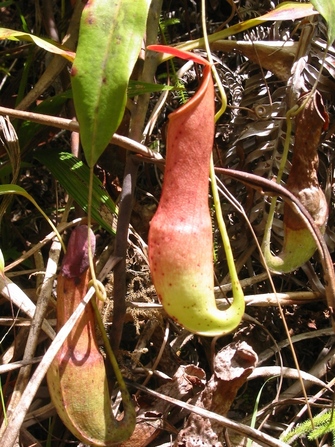
Figure 4: A carnivorous pitcher establish.
A cannibal pitcher plant that preys upon insects by luring them into the elongated tube where the insects become trapped, dice and are then digested.
© 2013 Nature Education Courtesy of M. E. Benbow. All rights reserved.
Some other interaction that is much similar predation is herbivory, which is when an private feeds on all or part of a photosynthetic organism (institute or algae), possibly killing information technology (Gurevitch et al. 2006). An important difference between herbivory and predation is that herbivory does not always atomic number 82 to the decease of the individual. Herbivory is frequently the foundation of food webs since it involves the consumption of primary producers (organisms that convert low-cal energy to chemical energy through photosynthesis). Herbivores are classified based on the part of the plant consumed. Granivores swallow seeds; grazers eat grasses and low shrubs; browsers eat leaves from copse or shrubs; and frugivores eat fruits. Plants, like prey, also have evolved adaptations to herbivory. Tolerance is the power to minimize negative effects resulting from herbivory, while resistance means that plants use defenses to avoid being consumed. Concrete (for case, thorns, tough textile, sticky substances) and chemical adaptations (for instance, irritating toxins on piercing structures, and bad-tasting chemicals in leaves) are ii common types of plant defenses (Gurevitch et al. 2006) (Effigy 5).
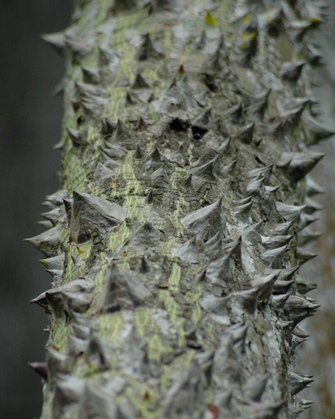
Effigy 5: Sharp thorns on the branch of a tree, used every bit anti-herbivory defense.
© 2013 Nature Teaching Courtesy of Yard. East. Benbow. All rights reserved.
Symbiosis: Mutualism, Commensalism and Parasitism
Symbiosis is an interaction characterized by ii or more species living purposefully in direct contact with each other. The term "symbiosis" includes a broad range of species interactions simply typically refers to three major types: mutualism, commensalism and parasitism. Mutualism is a symbiotic interaction where both or all individuals benefit from the human relationship. Mutualism can exist considered obligate or facultative. (Be enlightened that sometimes the term "symbiosis" is used specifically to hateful mutualism.) Species involved in obligate mutualism cannot survive without the relationship, while facultative mutualistic species can survive individually when separated just oftentimes not equally well (Aaron et al. 1996). For instance, leafcutter ants and certain fungi have an obligate mutualistic relationship. The ant larvae eat only one kind of fungi, and the fungi cannot survive without the constant care of the ants. As a result, the colonies activities circumduct around cultivating the fungi. They provide it with digested leaf textile, tin sense if a leaf species is harmful to the fungi, and go along information technology free from pests (Figure half-dozen). A skilful instance of a facultative mutualistic human relationship is found between mycorrhizal fungi and found roots. It has been suggested that 80% of vascular plants form relationships with mycorrhizal fungi (Deacon 2006). Yet the relationship can turn parasitic when the environment of the fungi is food rich, because the establish no longer provides a benefit (Johnson et al. 1997). Thus, the nature of the interactions between two species is ofttimes relative to the abiotic conditions and not ever hands identified in nature.
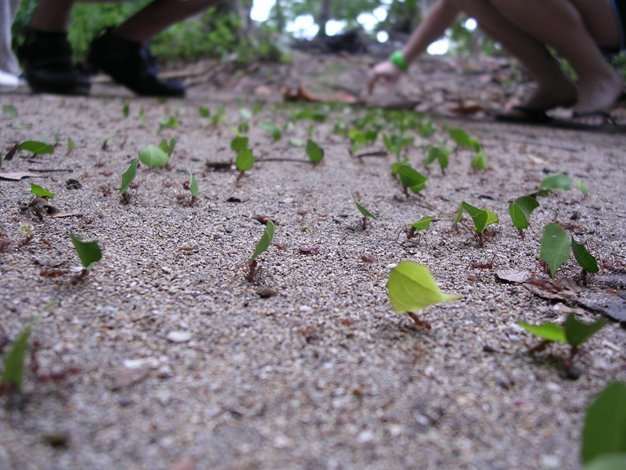
Figure half-dozen: Leaf cutter ants.
Leaf cutter ants carrying pieces of leaves back to the colony where the leaves will be used to abound a fungus that is and then used every bit food. The ants will brand "trails" to an acceptable leaf source to harvest it rapidly.
© 2013 Nature Education Courtesy of M. E. Benbow. All rights reserved.
Commensalism is an interaction in which i private benefits while the other is neither helped nor harmed. For example, orchids (examples of epiphytes) plant in tropical rainforests grow on the branches of trees in guild to access low-cal, just the presence of the orchids does non affect the trees (Effigy 7). Commensalism tin can be difficult to identify because the individual that benefits may have indirect effects on the other individual that are not readily noticeable or detectable. If the orchid from the previous instance grew also large and broke off the co-operative or shaded the tree, and then the relationship would get parasitic.
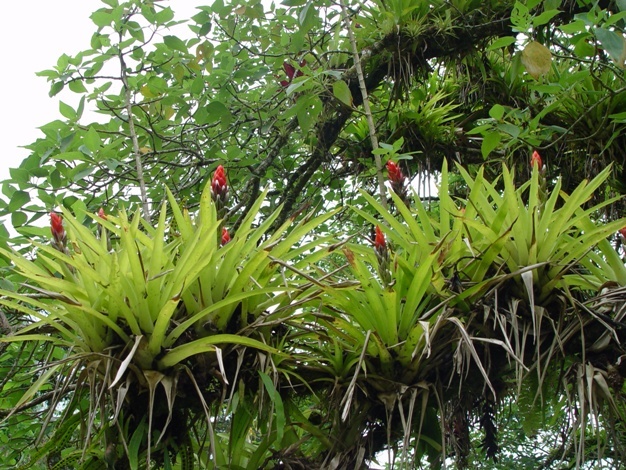
Figure seven: Epiphytic bromeliads that abound on the limbs of big tropical rainforest trees.
The bromeliads benefit by occupying space on the limb receiving pelting and sunlight, just practice not harm the tree.
© 2013 Nature Educational activity Courtesy of M. E. Benbow. All rights reserved.
Parasitism occurs when i individual, the parasite, benefits from some other individual, the host, while harming the host in the process. Parasites feed on host tissue or fluids and tin be found within (endoparasites) or outside (ectoparasites) of the host trunk (Holomuzki et al. 2010). For example, dissimilar species of ticks are mutual ectoparasites on animals and humans. Parasitism is a good example of how species interactions are integrated. Parasites typically do not kill their hosts, but can significantly weaken them; indirectly causing the host to die via illness, furnishings on metabolism, lower overall health and increased predation potential (Holomuzki et al. 2010). For instance, at that place is a trematode that parasitizes certain aquatic snails. Infected snails lose some of their characteristic behavior and volition remain on the tops of rocks in streams where food is inadequate and fifty-fifty during peaks of waterfowl activity, making them like shooting fish in a barrel prey for the birds (Levri 1999). Further, parasitism of prey species tin can indirectly modify the interactions of associated predators, other casualty of the predators, and their own prey. When a parasite influences the competitive interaction betwixt two species, information technology is termed parasite-mediated competition (Figure eight). The parasite tin can infect one or both of the involved species (Hatcher et al. 2006). For example, the malarial parasite Plasmodium azurophilum differentially infects two cadger species found in the Caribbean area, Anolis gingivinius and Anolis wattsi. A. gingivinius is a better competitor than A. wattsi but is susceptible to P. azurophilum, while A. wattsi rarely contracts the parasite. These lizards are establish coexisting only when the parasite is present, indicating that the parasite lowers the competitive power of A. gingivinius' (Schall 1992). In this case, the parasite prevents competitive exclusion, therefore maintaining species diversity in this ecosystem.
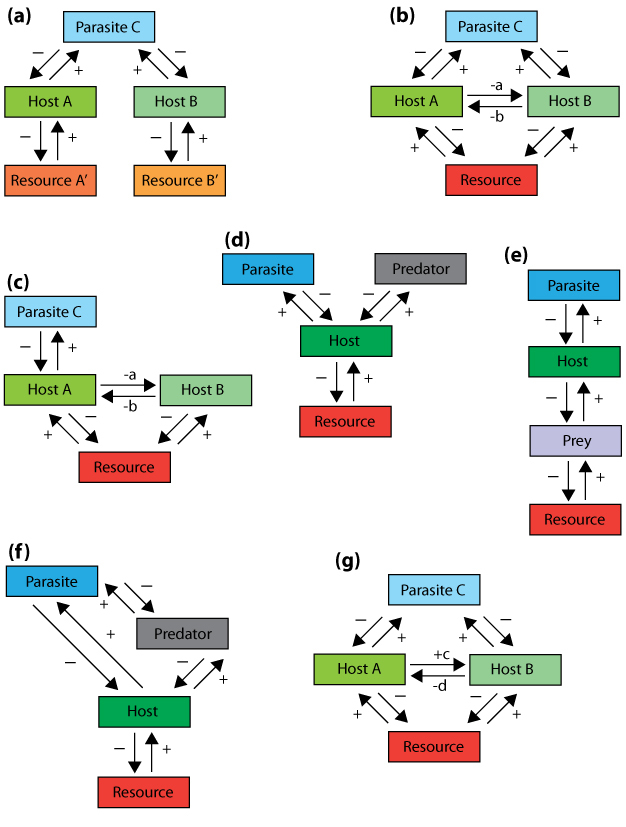
Figure 8: Multiple conceptual models of species interactions that involve parasites.
The + and – bespeak positive and negative influence, respectively, between resources, hosts, predators and parasites.
© 2013 Nature Education Reproduced with permission from Hatcher et al. 2006. All rights reserved.
Summary
The species interactions discussed to a higher place are only some of the known interactions that occur in nature and can be difficult to identify because they can directly or indirectly influence other intra-specific and inter-specific interactions. Additionally, the role of abiotic factors adds complexity to species interactions and how we understand them. That is to say, species interactions are part of the framework that forms the complexity of ecological communities. Species interactions are extremely important in shaping community dynamics. Information technology was originally thought that contest was the driving force of community structure, but it is now understood that all of the interactions discussed in this article, along with their indirect effects and the variation of responses inside and between species, define communities and ecosystems (Agrawal 2007).
Source: https://www.nature.com/scitable/knowledge/library/species-interactions-and-competition-102131429/
0 Response to "Directed Reading Major Biological Communities Answer Key"
Post a Comment